THE WRITING CENTER SAVED MY LIFE Or Maybe It Gave Me Permission to Finally Live My Own
Aug 24, 2026
MY BODY SAID, “ENOUGH”
At thirty, I had a nervous breakdown in New Orleans.
I was attending a national research conference with MDs, PhDs, statisticians, and other very important people doing very important things.
I was the co-director of the San Diego research site.
I was supposed to have my shit together.
My body had other plans.
For years, I'd gotten very good at performing Michelle.
Competent Michelle. Successful Michelle. Good-daughter Michelle. Good-wife Michelle. Michelle-who-could-handle-anything.
But in New Orleans, my body decided it was done participating in the farce.
Keep your shit together, Michelle.
I don't care if you're not eating or sleeping. Pretend you are.
What are people going to think if you lose it?
My mind kept issuing orders. My body stopped obeying.
For three days, while my colleagues discussed research and data, I sat in the back of the meeting room and sobbed.
Sometimes the first act of Good Trouble is your body refusing to keep living the lie.
SOMEONE FINALLY SAW ME
When I returned to San Diego, I started seeing a therapist.
During our first meeting, she said, "Michelle, you have PTSD."
"Hold up. I didn't serve in Vietnam. I didn't live in a war-torn country. I grew up here."
She explained that I had experienced chaos and trauma as a child. Now my oldest daughter, Molly, was turning five and heading to kindergarten.
I couldn't protect her every minute anymore.
I cried but not because of the diagnosis.
I cried because someone had finally seen me.
The real me. The scared me. The me underneath all those masks.
And she didn't flinch.
There is incredible power in being fully seen—and discovering the other person isn't going anywhere.
I WAS STILL PERFORMING
Six months into therapy, I was doing better.
But I wasn't okay.
I still woke drenched in sweat. When Bill traveled, I saw men hiding in the bushes. I'd close the blinds, keep the girls close until bedtime, and sleep on their floor.
And every morning?
I got up and performed normal.
I mothered. I worked. I smiled.
Nobody knew that on my commute to work I gripped the steering wheel and sped through underpasses, convinced the big earthquake would hit while I was underneath one.
Clearly, I decided, this was a career problem.
MY BRILLIANT PLAN: BECOME A WRITER
Yep.
Quit UC San Diego and become a writer.
Then I could work from home and limit my "outside" responsibilities to driving the girls where they needed to go.
Brilliant.
Except I wasn't confronting my fear. I was reorganizing my life around it.
ENTER: THE SAN DIEGO READER
This was 1992.
Before Google. Before social media. Before you could search How do I become a writer without leaving my house?
We had the San Diego Reader.
That's where I found an ad for The Writing Center, now San Diego Writers, Ink.
A place for writers?
A mecca for writers or agoraphobics.
Perfect.
Except I had to leave my house to get there.
So, I drove downtown to a historic building that had once been a brothel.
Of course it had.
I KNOCKED ON THE DOOR
A woman answered with a huge smile, sparkling eyes, and a cool, choppy blonde-gray haircut.
I stared at her.
"Judy?"
"Yes."
"I'm Michelle. Marty and Monita's daughter."
She hugged me.
"Oh, it's been years. You must have been ten when your family left PB. And now you're...?"
"Thirty."
"Come in. Come in."
And I did.
I didn't know it yet, but walking through that door would change my life.
FIVE DOLLARS. ONE CHAIR. NO MASKS REQUIRED.
I started attending Thursday Night Writers.
Five bucks. Drop in. No application. No credentials. No need to call yourself a writer.
Judy gave us a prompt. We'd write for twelve to seventeen minutes. Then, if we wanted to, we'd read.
No critiques. No fixing. No advice.
We wrote.
We shared.
We listened.
I went religiously for four years.
I thought I was learning to write.
I wasn't.
I was learning how to tell the truth.
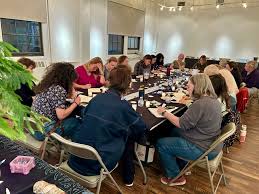
To speak without being corrected. To be heard without impressing anyone. To bring the messy, scared, funny, angry, imperfect Michelle into a room and discover she was welcome there, too.
Thursday nights became my homecoming.
My healing.
The beginning of becoming me.
I walked into The Writing Center because I wanted to become a writer. I kept coming back because it was teaching me how to become myself.
THE WRITING CENTER WAS GOOD TROUBLE
Why?
Because it gently broke the rules about who gets to have a voice.
For five dollars, you got a chair in the circle.
You wrote.
You read if you wanted to.
Everyone else listened.
No fixing. No judging. No performing.
I had spent thirty years learning the rules:
Be good.
Keep your shit together.
Make people happy.
Don't let them see you struggle.
Don't be too much.
Then I walked into a funky old brothel-turned-writing-center where Judy essentially said:
Tell the truth. We'll listen.
GOOD TROUBLE CREATES DIFFERENT RULES
Good Trouble organizations don't just criticize systems that aren't working.
They create alternatives.
The Writing Center replaced:
Hierarchy with circles.
Performance with presence.
Expertise with lived experience.
Judgment with curiosity.
Competition with community.
Silence with story.
Power-over with power-with.
Nobody stood at the top deciding whose story mattered.
We sat together.
We listened.
And slowly, something inside me changed.
I wasn't a research director, dietitian, wife, mother, or woman desperately trying to prove she had her shit together.
I was Michelle.
And Michelle had something to say.
I DIDN'T KNOW IT YET, BUT THIS WAS IGNITED LEADERSHIP
Photo: Judy Reeves, WRITER & TEACHER
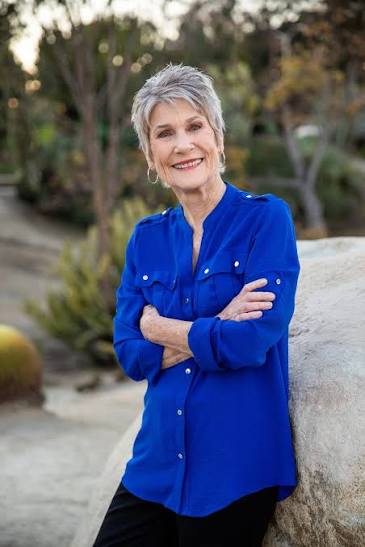
Decades later, I would call what I experienced in that room Ignited Leadership.
Leadership isn't a position we earn after someone else decides we're worthy.
It begins when we know ourselves, trust ourselves, tell the truth, and make room for others to do the same.
That's what Judy and The Writing Center gave me.
Not permission to become a writer.
Permission to become myself.
That's what Good Trouble organizations, groups, and human beings do.
They create spaces where we can remember who we are.
They challenge the rules that keep people quiet, small, competing, performing, and disconnected and replace them with something more human:
Voice. Story. Belonging. Connection. Shared power.
The Writing Center didn't march on City Hall.
It didn't overturn legislation.
It didn't issue a manifesto.
Every Thursday night, it simply gathered human beings in a circle and said:
Your story matters. We're listening.
That’s what Good Trouble looks like.
STAYED TUNED…
In June, we started the GOOD TROUBLE series. Inspired by John Lewis’ quote:
"Speak up, speak out, get in the way. Do not get lost in a sea of despair. Be hopeful, be optimistic. Our struggle is not the struggle of a day, a week, a month, or a year — it is the struggle of a lifetime. Never, ever be afraid to make some noise and get in good trouble, necessary trouble."
We highlighted Good Trouble Human Beings who challenge the status quo narratives through how they live, speak, create, advocate, and lead.
In July and August, we focused on Good Trouble Groups and Organizations. These are the organizations that are building spaces and systems around values that focus on belonging instead of exclusion, collaboration instead of competition, voice instead of silence, power-with instead of power-over.
On August 31st we will “wrap up” the Good Trouble series by offering tips, advice, insights to other Good Trouble Groups and Organizations from our LOUDER GIRL community.
YOU DON’T HAVE TO DO THIS ALONE.
Join LOUDER GIRL for stories, connection, and courage to live life on your terms.
We hate SPAM. We will never sell your information, for any reason.